
How to Homeschool Kindergarten in 2026–2027: A Simple Guide to What Actually Matters
Jul 22, 2026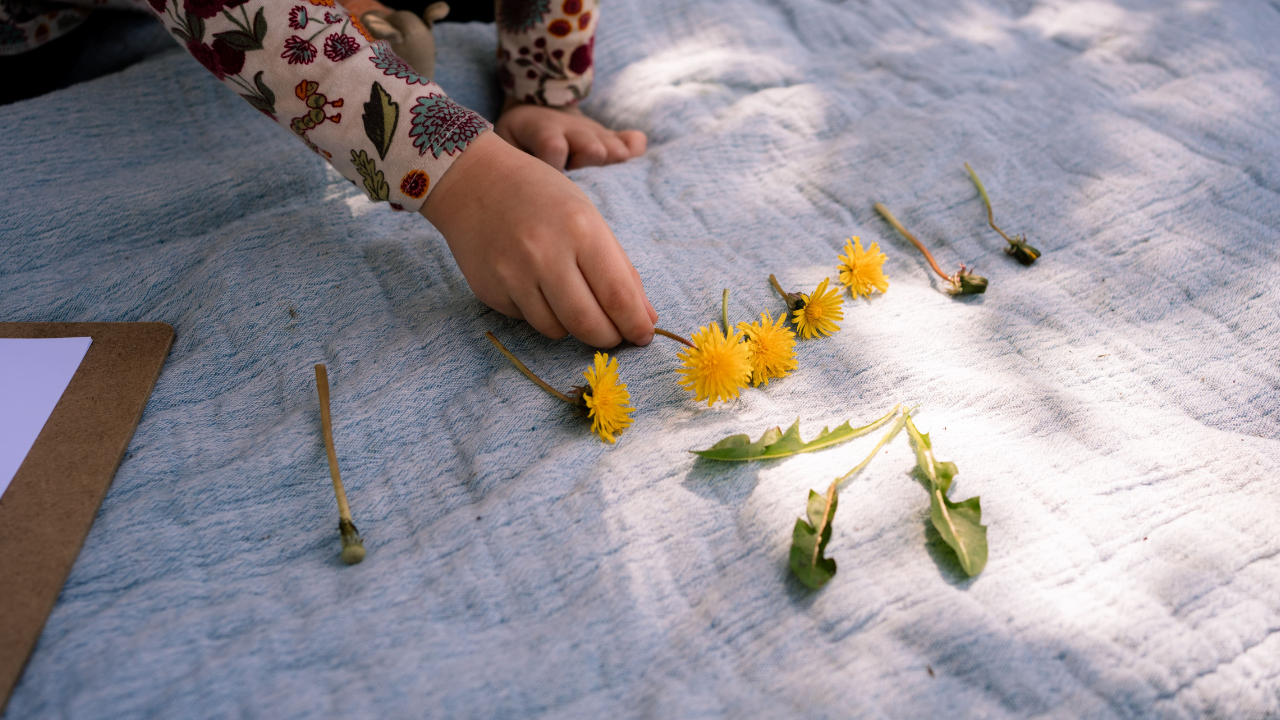
If you're getting ready to homeschool kindergarten this year, you may be feeling a mix of excitement and uncertainty. One moment you're imagining cozy mornings reading stories together, and the next you're wondering if you've somehow become responsible for your child's entire future.
If that sounds familiar, you're in very good company.
Almost every parent I talk to starts with the same questions.
- What subjects do I actually need to teach?
- How long should our school day be?
- What should our days look like?
They're all good questions. And if you've spent any time searching online, you've probably discovered there are about a thousand different answers. Some make kindergarten look like a miniature version of elementary school, complete with color-coded schedules, stacks of school supplies, and lesson plans for every subject. Others suggest throwing out all structure and simply following your child's interests.
No wonder parents of kindergarteners feel overwhelmed before they've even begun.
So let's take a deep breath together and simplify things.
After more than twenty years working with young children, as a preschool teacher, special education teacher, mother, and now as the creator of Wonder Garden Curriculum, I've learned that kindergarten is much simpler than we often make it. There are certainly foundational skills children need to develop, but the way they learn those skills is often very different from what we imagine.
My hope is that by the end of this article you'll feel less pressure, more confidence, and a little more excited about the beautiful educational journey you're about to begin.
Homeschool Kindergarten Isn't School Kindergarten
One of the biggest mindset shifts for new homeschool families is realizing that homeschool kindergarten and school kindergarten have completely different purposes.
A classroom teacher is doing something remarkable. They're creating positive learning experiences for twenty or more young learners with different personalities, different abilities, and different needs, all while keeping everyone safe, on schedule, and moving toward the same goals.
Naturally, that requires a lot of structure.
Your home is different.
Whether your classroom is your dining room table, your backyard, your couch, or a blanket under your favorite tree, you have something a classroom teacher rarely gets: the freedom to slow down and teach the child in front of you.
That's one of the greatest gifts of homeschooling.
Instead of trying to keep twenty-five children moving together, you can pause when your little guy becomes fascinated by a caterpillar crossing the sidewalk. You can spend another twenty minutes reading because your child asks for "just one more chapter." You can decide that today's science lesson has suddenly become an afternoon of digging in the garden because everyone discovered earthworms after the rain.
That isn't falling behind.
That's taking advantage of one of the greatest strengths of homeschooling.
What Actually Matters in Kindergarten?
If I could simplify kindergarten down to the five most important things, this is where I'd begin.
- Protect Time for Play
When I taught preschool, there were days that looked like almost nothing was being learned.
One group of children spent nearly an hour building an elaborate zoo from wooden blocks. Across the room, another group carefully mixed leaves, flowers, sticks, and mud into what they proudly called "birthday soup." A few others had transformed a cardboard box into a spaceship that was apparently headed for Mars.
If you had walked into my classroom at that moment, you might have wondered when the learning was going to begin.
The truth is, it already had.
Those children were solving problems, planning, negotiating, experimenting, creating stories, practicing language, learning social skills, and developing their imaginations. They were learning to work through disagreements, test ideas, and think creatively.
Play wasn't taking time away from learning.
Play was the learning.
One of the biggest misconceptions about kindergarten is that children learn best by sitting still for longer periods of time. Development simply doesn't support that idea. Young children learn through movement, conversation, exploration, and hands-on experiences. The more opportunities they have to create, imagine, build, and explore, the stronger those essential skills become.
Sometimes the very best thing you can do for your child's education is simply step back and let them play.
- Read Aloud Every Single Day
If I could encourage every homeschool family to make one thing non-negotiable, it would be reading together every day.
Great read-alouds do so much more than build language arts skills.
They introduce children to new vocabulary, help them understand emotions, develop empathy, strengthen attention, spark conversations, and create a lifelong love of books.
Some of my favorite memories with my own boys happened curled up together with library books scattered across the couch. We reread favorite stories more times than I can count, and honestly, I wouldn't trade those evenings for perfectly completed worksheets.
Reading aloud is one of those beautiful things that accomplishes dozens of learning goals at once without ever feeling like school.
It's also one of the simplest ways to build connection, and connection is one of the best teachers a child will ever have. (More about this in #4)
- Spend Time in the Natural World
Nature has always been one of my favorite classrooms.
Not because every walk turns into a science lesson, but because nature invites children to notice.
When children spend time outside, they naturally begin asking questions.
Why are these leaves different shapes?
Where did that bird go?
Why do ants always seem to know where they're going?
Those questions are the beginning of science.
They're also the beginning of curiosity.
You don't need elaborate educational resources or complicated experiments to help your child understand the natural world. Some of the richest learning happens while collecting pinecones, watching clouds drift by, turning over logs, or noticing the first flowers of spring.
Nature slows us down.
It reminds us that learning doesn't always happen inside a workbook.
- Build the Relationship Before the Lesson
This might be the most important thing on the entire list.
The relationship you build with your child is the foundation every lesson rests on.
Children learn best when they feel emotionally safe, seen, and connected.
That doesn't mean every homeschool day will be peaceful. Every family has hard mornings. Every parent has moments when patience runs a little thin, but when children know they're loved regardless of whether they mastered today's math lesson, they're much more willing to take risks, make mistakes, and keep trying.
Social-emotional learning isn't another subject to squeeze into your schedule. It's woven into daily life.
It's built while baking muffins together, cleaning up after art projects, apologizing after a hard moment, celebrating small victories, and listening carefully when your child tells you about their day.
Those ordinary moments matter more than we sometimes realize.
- Create a Gentle Daily Rhythm
Notice I didn't say schedule.
I said rhythm.
There's a difference.
A schedule tells you what time everything should happen.
A daily rhythm simply creates a comforting flow to the day.
Maybe your morning time begins with breakfast, a poem, a folk song, and a picture book. Maybe you move into a short math lesson before heading outside. Maybe afternoons are for art projects, creative play, practical life skills, or quiet reading together.
Your rhythm doesn't have to look like anyone else's.
It simply needs to support your child's needs and your family's life.
One of the beautiful things about homeschooling is that you get to create a rhythm that actually fits your family instead of trying to fit your family into someone else's schedule.
How Long Should Homeschool Kindergarten Take?
This answer surprises a lot of homeschooling moms.
Less time than you probably think.
For most children, somewhere between forty-five minutes and an hour of intentional academic learning is plenty. Some days it may be a little longer. Other days it may be much shorter.
Remember, formal curriculum is only one small part of your child's education.
Learning continues while measuring flour for muffins, helping plant tomatoes, folding laundry, building forts, listening to stories, and asking endless questions about how the world works.
Those experiences aren't interruptions to learning. They are learning.
If your child spends the afternoon building with blocks after finishing a short phonics lesson, they're not "just playing."
They're continuing to build foundational skills in ways that are perfectly suited for this stage of development.
What Subjects Are Truly Necessary?
At this age, I'd focus on building strong foundations rather than trying to cover every possible topic.
Your core subjects might include:
- Reading aloud and early language arts
- Early literacy and phonics
- Hands-on math
- Nature and simple science
- Social studies through stories, maps, family traditions, and your local community
- Art and music
- Movement
- Practical life skills
- Plenty of free play
The wonderful part is that these subjects naturally overlap.
Bake bread together and you've practiced math, sequencing, science, reading, fine motor skills, and practical life skills all at once.
Go on a field trip to a local farm and you've explored science, social studies, vocabulary, observation, and conversation.
Children don't naturally separate learning into neat little boxes.
Neither should we.
A Simple 'Wonder Garden' Morning
Here's an example of a gentle kindergarten morning.
Morning time begins with a favorite picture book, a poem, a folk song, and a few quiet moments together. From there, you might spend ten or fifteen minutes exploring letters or phonics through interactive lessons and hands-on activities before moving into a playful math game.
After that?
Head outside.
Collect leaves.
Build a fairy house.
Watch birds.
Dig in the garden.
Ask questions.
Come inside for lunch, read another chapter together, create an art project, or simply enjoy the afternoon together.
Altogether, your focused academic time may only total forty-five minutes.
The rest of the day is still full of learning.
It just doesn't always look like school.
A Word About AI
As we head into the 2026–2027 school year, there's one new conversation that's becoming harder to ignore.
Artificial intelligence.
As I think about the world today's kindergarteners are growing up in, I find myself caring even less about how quickly they memorize information and even more about the qualities that make them deeply human. Curiosity. Creativity. Kindness. Problem-solving. Wonder.
AI can provide answers in seconds, but it can't replace a child who notices the first ladybug of spring, asks thoughtful questions, comforts a friend, or imagines an entirely new world with a cardboard box.
Those are the kinds of abilities I hope we're protecting in these early years, and it grows my conviction in what Kindergarten should look like.
What I do like about AI is that I believe it can become a wonderful assistant for parents. It can help generate ideas, explain a science question in simple language, suggest great books connected to your child's interests, or help you think through lesson plans when you're feeling stuck.
What it can't do is replace you. It can't replace sitting shoulder to shoulder reading a favorite story. It can't replace laughing together while baking bread.
One Final Thought
I hope this article leaves you feeling a little lighter than when you started reading.
The early years aren't about racing toward second grade. They're about building a strong foundation - a child who feels safe, curious, capable, and excited to learn. Those things aren't measured by how many worksheets you finish. They're built in the ordinary moments of everyday life: reading one more story, taking one more nature walk, lingering over breakfast, and answering one more "why?"
Those moments may not always feel remarkable while you're living them, but years from now, I think you'll discover they were the most important part of your child's education all along.
When you focus on your child's needs, protect their curiosity, spend time together, read wonderful books, explore the natural world, and build a peaceful rhythm that fits your family, you're already giving them so much of what they need.
Where Wonder Garden Fits In
After reading all of this, you might be thinking, "I love this philosophy...but I also don't want to wake up every morning wondering what we're going to do."
I completely understand.
One of the reasons I created Wonder Garden was because I wanted parents to have both freedom and support. I didn't want to hand families another curriculum that felt like a checklist they were constantly falling behind on. I wanted to create something that felt more like a trusted guide walking alongside them.
Every week has a gentle rhythm and a clear path, so you're never left wondering what to teach next. At the same time, there's room to follow your child's curiosity. If they become fascinated with butterflies, spend another day outside. If they want to build forts all afternoon, build the fort. If life happens and you don't finish everything that week, that's okay too.
Everything feels connected because life is connected.
That's the heart of Wonder Garden.
It's a curriculum built around curiosity rather than pressure, connection rather than perfection, and meaningful experiences rather than simply checking boxes.
My hope has never been to help families finish a curriculum. My hope is to help children fall in love with learning.
Author


